
Categories
Technical Library

Reformer Tube Failure Mechanisms in Steam Methane Reformers

Creep Damage, Carburization, and Creep Crack Propagation to the OD Surface

Steam methane reformer (SMR) radiant tube integrity is the single most critical factor affecting reformer reliability, hydrogen production, and plant safety.

Reformer tube failures are rarely sudden or random. They develop over time through predictable metallurgical degradation mechanisms driven by sustained high temperature, internal pressure, and environmental exposure.

The primary reformer tube failure mechanisms are:

  • Creep damage (dominant mechanism)
  • Carburization-induced embrittlement
  • Creep crack propagation to the OD surface

Understanding these mechanisms is essential for accurate inspection, life assessment, and failure prevention.


Operating Conditions That Drive Tube Damage

Reformer tubes operate under extreme conditions:

  • 800–950℃ metal temperatures
  • Continuous internal pressure and hoop stress
  • Hydrogen-rich atmosphere
  • Thermal gradients across tube walls
  • Exposure to flame patterns and burner alignment effects

Under these conditions, high-temperature alloys experience time-dependent deformation and microstructural degradation. Without proper monitoring, this damage progresses until rupture occurs.


1. Creep Damage — The Primary Reformer Tube Failure Mechanism

Creep is the dominant and most prevalent failure mechanism in reformer tubes. Creep is defined as time-dependent plastic deformation under constant stress at elevated temperature.

Metallurgical Progression of Creep Damage

In HP-modified and similar reformer alloys, creep damage typically evolves as follows:

  1. Grain boundary sliding begins
  2. Micro-voids nucleate at grain boundaries
  3. Voids coalesce into micro-fissures
  4. Longitudinal creep cracks form
  5. Through-wall rupture occurs

This process is progressive and cumulative. Importantly, creep damage initiates at the microstructural level long before external deformation becomes visible.

Operational Factors That Accelerate Creep

Creep strain rate increases significantly when tubes experience:

  • Local overheating from flame impingement (e.g., misaligned burners)
  • Flue gas maldistribution
  • Insufficient combustion air in a burner zone
  • Pinched (dead) tubes that overheat and raise temperatures on neighboring tubes
  • Catalyst fouling/poisoning that creates localized hot spots
  • Thermal shock or rapid temperature excursions

Even isolated overheating can substantially reduce remaining tube life.

Field Indicators of Advanced Creep

Visible indicators may include:

  • Tube diameter growth (bulging)
  • Swelling
  • Giraffe necking
  • Surface-breaking cracking (late-stage)

By the time these are obvious, a significant portion of creep life has typically been consumed.


2. Carburization in Reformer Tubes

Carburization occurs when carbon diffuses into the alloy from the process gas environment. This alters the alloy’s microstructure and mechanical properties.

Metallurgical Effects of Carburization

Carburization commonly results in:

  • Reduced ductility
  • Increased brittleness
  • Reduced creep rupture strength
  • Increased susceptibility to crack initiation and propagation

Although carburization does not necessarily “create cracks” by itself, it reduces creep resistance and can accelerate failure, especially under overheating conditions.

Common Root Causes

Carburization risk can increase due to:

  • Impurities in natural gas feed
  • Upstream cleanup issues (e.g., bed performance problems)
  • Contaminant ingress that contributes to hot spot development
  • Localized temperature excursions

Carburized tubes may fail in a more brittle manner compared to purely creep-dominated tubes.


3. Creep Crack Propagation to the OD Surface

In reformer tubes, cracking is not typically externally initiated. What is sometimes described as “OD cracking” is more accurately defined as:

Creep crack propagation that has advanced through the wall thickness and become surface-breaking at the outside diameter (OD).

How Creep Cracks Reach the OD Surface

As creep voids coalesce:

  • Longitudinal cracks form parallel to the tube axis
  • Cracks propagate through wall thickness
  • The crack eventually breaks through to the OD surface

When a crack becomes visible at the outside diameter, damage is typically advanced. The crack origin is internal grain boundary degradation — not an external corrosion or stress corrosion mechanism.

Why Surface-Breaking Creep Cracks Are Critical

Once creep cracking reaches the OD surface:

  • Remaining ligament thickness is reduced
  • Local stress concentration increases
  • Crack growth rate can accelerate
  • Rupture risk rises significantly

At this stage, remaining life is often limited, and risk-based decisions should be made using inspection data plus a qualified remaining life assessment approach.


Why Traditional Inspection Methods Miss Early Damage

Creep damage begins internally and can be circumferential. Conventional approaches such as visual inspection, infrared thermography, and standard ultrasonic thickness measurements may not reliably detect early-stage creep void formation or micro-crack initiation.

Effective reformer tube inspection should aim to evaluate:

  • Full 360° circumference condition (not only the fired side)
  • Diameter expansion and strain trends
  • Crack indications and their distribution
  • Comparison to baseline and prior inspections

Detecting damage before cracks become surface-breaking is the key to preventing unplanned failures. Because creep damage develops internally, specialized inspection methods are required. Learn more in our reformer tube inspection methods article.


Baseline and Trend Monitoring

A proactive reformer inspection program typically includes:

  • Baseline measurements for new tubes
  • Periodic inspections during turnarounds
  • Post-excursion evaluations following overheating or thermal shock events
  • Expansion/strain trending by tube section
  • Remaining life assessment using inspection results and operating history

Trend data provides significantly more insight than a single inspection snapshot because it shows how damage is progressing over time.


Conclusion: Predictable Damage, Preventable Failures

Reformer tube failures are rarely unexpected. They are typically the result of predictable metallurgical mechanisms:

  • Time-dependent creep deformation
  • Carburization-induced embrittlement
  • Creep crack propagation to the OD surface

By understanding these mechanisms and implementing a proper inspection and monitoring program, operators can extend tube life safely, reduce rupture risk, improve reformer reliability, and optimize turnaround planning.


Reformer Tube Inspection & Life Assessment Support

If your facility has experienced overheating, thermal excursions, catalyst-related hot spots, or aging tube populations, a detailed creep and crack assessment can identify risk before failure occurs.

Contact Kontroll Technik for reformer tube inspection and life evaluation guidance.

Request a Consultation  |  View Technical Library  |  Inspection Services

Suggested internal link: Add a link in this article to your “Reformer Tube Inspection Methods” post, and link back from that post to this one.
Categories
Technical Library

The API 561–Aligned Approach to Prevent Tube Failures

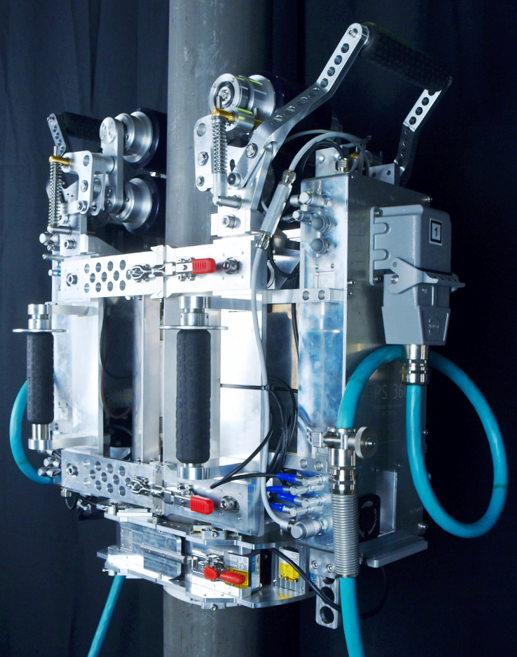
Learn how reformer tube inspection for steam methane reformers improves safety and reliability under API 561, and how Kontroll Technik’s RPS-360 OD eddy current inspections detect cracking from the OD to the ID.

RPS-360 OD crawler performing reformer tube inspection
RPS-360 OD crawler used by Kontroll Technik for high-resolution reformer tube inspection.

Why Reformer Tube Integrity Matters in Steam Methane Reformers

Steam methane reformers operate under extreme temperatures and stress. Reformer tubes are expected to deliver stable performance while exposed to high heat flux, internal process pressure, and aggressive operating environments. When tube integrity is compromised, the result can be sudden leaks, furnace upset, unplanned shutdowns, and in the worst cases, tube rupture.

That’s why reformer tube inspection for steam methane reformers is a core part of risk management. The goal is simple: find damage early, understand its severity, and act before it becomes a failure.

API 561 and What It Means for Reforming Furnaces

Many sites align their reformer integrity programs to API 561, which is intended to address reforming furnaces for hydrogen and synthesis gas production. This helps plants standardize expectations for equipment integrity, inspection planning, documentation, and engineering assessment workflows. (Always confirm how your facility applies API standards within its local jurisdiction and internal mechanical integrity program.)

External reference: API’s standards plan listing for Std 561 can be found here: API Standards Plan (Std 561 listing)

How Reformer Tubes Get Damaged

1) Creep and Creep Strain

Creep is time-dependent deformation under high temperature and stress. Over long operating cycles, creep can lead to gradual tube growth, bulging, and reduced remaining life. Dimensional growth trends are often among the most valuable signals for prioritizing tube replacement planning.

2) Thermal Hot Spots and OD-Initiated Damage

Hot spots, flame impingement, and thermal cycling can accelerate damage at the outside diameter (OD). This is important because many cracking mechanisms begin at the OD and progress toward the ID.

3) Cracking Progression: OD to ID

A key integrity risk is cracking that initiates on the OD and grows inward. If your inspection method can’t reliably detect OD-to-ID crack behavior, you can miss early warning signs.

Why UT Is Not Good for Reformer Tube Inspection

While ultrasonic testing (UT) is common in many inspection programs, it is often not a good fit for reformer tubes—especially centrifugally cast alloys—because coarse microstructures can scatter ultrasonic energy and reduce repeatability for the damage types plants care most about (early cracking and reliable characterization).

In practical terms: UT may be used in some heater coil applications, but for reformer tubes, many operators prefer technologies that are better suited to crack detection and consistent repeatable results in these materials.

Eddy Current Testing: Strong OD-to-ID Crack Detection

Eddy current inspection is widely valued for its crack sensitivity, particularly for flaws that initiate at or near surfaces. For reformer tubes, a major advantage is that eddy current methods can be applied to detect cracking behavior that progresses from the OD toward the ID, supporting earlier and more confident decision-making than methods that struggle in coarse-grained cast tube materials.

Kontroll Technik’s RPS-360 OD Inspection Approach

Kontroll Technik performs specialized reformer tube inspections using the RPS-360 OD system. The OD inspection system is designed to support:

  • 360-degree crack detection
  • Repeatable data collection (no couplant required)
  • Simultaneous expansion measurement and crack detection
  • High data density over the full tube length
  • Fast turnaround and on-site reporting support

This aligns with the intent of modern integrity programs: collect high-quality inspection data and convert it into actionable decisions before leaving the site. (Capabilities and workflow descriptions summarized from Kontroll Technik’s OD inspection service page.)

RPS-360 OD reformer tube inspection system
RPS-360 OD: designed for full-length OD inspection coverage with repeatable eddy current measurements.

What a Strong Reformer Tube Inspection Program Includes

Pre-Shutdown Planning

  • Review tube age, duty, and temperature history
  • Identify higher-risk areas (known hot rows, burner patterns, historical hot spots)
  • Define inspection scope and reporting expectations

Field Inspection Execution (OD Focus)

  • System verification and calibration checks
  • Full-length OD scan coverage
  • Simultaneous dimensional expansion trending and crack detection

Engineering Review and Reporting

  • Tube-by-tube condition assessment
  • Crack locations and severity prioritization
  • Replacement planning support (focus tubes first, then batch strategy)
  • Documentation that supports facility integrity management expectations

Quick Comparison: UT vs Eddy Current for Reformer Tubes

Topic UT Eddy Current (OD)
Suitability for centrifugally cast tube microstructure Often limited Strong
OD-to-ID crack detection Often challenging Strong capability
Repeatability in field conditions Variable High (no couplant)
Fast tube-by-tube screening during shutdown Depends on setup High

FAQs

How often should reformer tubes be inspected?

Most plants inspect during planned shutdowns/turnarounds, then adjust scope based on tube age, operating severity, and historical findings.

What is the biggest advantage of RPS-360 OD inspections?

High-quality, repeatable OD inspection data that supports both crack detection and expansion trending over the full tube length. Reformer tube inspection is performed to identify early creep damage and metallurgical degradation. For a detailed explanation of how reformer tubes fail, see our article on The API 561–Aligned Approach to Prevent Tube Failures.

Can eddy current detect cracks that start on the OD and grow toward the ID?

Yes—OD-focused eddy current inspections are specifically valuable for identifying cracking that initiates on the outside surface and progresses inward.

Why do many operators avoid UT for reformer tubes?

Because reformer tube materials and conditions can make UT less repeatable and less effective for the early crack/degradation signals that integrity teams need.

Do you provide reporting before leaving the site?

Kontroll Technik’s OD inspection page describes providing customer reporting before leaving the plant based on the collected tube data.

Where can I learn more about your OD inspection service?

Visit the Kontroll Technik OD inspection page: OD Reformer Tube Inspection

Talk to Kontroll Technik About Your Next Turnaround

If your facility operates steam methane reformers, Kontroll Technik can support your turnaround planning with specialized OD/ID reformer tube inspections using the RPS-360 system and experienced data interpretation.